Brazil travel guide
 Brazil travel guide

Brazil spans vast Amazon rainforests, vibrant cities like Rio and São Paulo, colonial Northeast towns, Pantanal wetlands, and dramatic waterfalls at Iguaçu. First-time visitors from Germany enjoy visa-free entry for 90 days, diverse food, beaches, and nature, but prepare for long distances, variable infrastructure, and Portuguese-dominant communication. Go for Carnival energy, wildlife, or relaxed beach time; expect humid heat, occasional heavy rain, and a mix of modern conveniences with occasional cash needs outside tourist zones.
- Days needed
- 10–14 days
- Daily budget
- $50 – $100
- Currency
- Brazilian Real (BRL) · 1 USD ≈ 5.89 BRL
- Language
- Portuguese
- Plugs
- Type C, N · 127V
- Emergency
- 190 police, 192 ambulance
When to go to Brazil
Brazil has no single peak season due to regional climates. Southeast (Rio/São Paulo): best April–June and September–November (mild 20–28°C, lower rain). Northeast beaches: September–March (dryer, 25–32°C). Amazon: June–November (drier trails) or December–May (flooded forest canoeing). Pantanal: May–October (dry, best wildlife). South: March–May or September–November (temperate). Avoid peak December–March (hot, humid, crowded, expensive) and Carnival (February/March dates vary) for lower costs and fewer crowds; July school holidays busy in nature areas.
Where the weather is best in Brazil, month by month:
Where to go in Brazil
Do I need a visa?
Find your passport in the list. For a tourist trip.
| Your passport | What you need | Cost |
|---|---|---|
| United States | e-Visa · 90 days | e-Visa US$80.90, 90 days (multiple entry up to 5–10 years validity) |
| United Kingdom | Visa-free · 90 days | Free, 90 days |
| EU (e.g. Germany) | Visa-free · 90 days | Free, 90 days (any 180-day period) |
| India | Visa required | Visa required (consular/e-Visa, ~US$80–100, check VFS) |
| Australia | e-Visa · 90 days | e-Visa US$80.90, 90 days |
| Canada | e-Visa · 90 days | e-Visa US$80.90, 90 days |
| China | e-Visa · 90 days | Free, 30 days |
| UAE | Visa-free · 90 days | Free, 90 days |
Passport valid 6+ months beyond stay recommended; onward ticket often checked. No ETIAS/ETA needed for visa-free; e-Visa via brazil.vfsevisa.com only for US/CA/AU.
Checked 23 Nov 2026. Entry rules and fees change; confirm with the official site or your airline before booking.
Getting there
Main gateways: São Paulo-Guarulhos (GRU, busiest long-haul hub with LATAM/GOL/Azul + international carriers) and Rio Galeão (GIG). Secondary: Brasília (BSB), Salvador (SSA), Recife (REC).
Getting around Brazil
✈️ Domestic flights
Domestic flights essential for long distances; worth it between regions (Rio–Amazon, São Paulo–Northeast).
- Typical cost:
- Typical one-way USD 50–150 (book 2–4 weeks ahead; higher peak)
- Airlines:
- LATAM, GOL, Azul
🚆 Trains
Limited network; mostly scenic or urban (e.g., Serra do Mar); book via operator sites.
- Typical cost:
- Example: Curitiba–Morretes ~USD 15–25
🚗 Driving & buses
Driving on right; toll roads common on highways (electronic tags or cash). Conditions vary—good interstates, poor rural; avoid night driving outside cities.
- Car hire:
- USD 40–80/day (compact, insurance extra)
- Fuel:
- USD 1.10–1.40/litre (ethanol cheaper in some areas)
- Licence:
- International Driving Permit recommended with EU license
⛴️ Ferries & boats
Ferries useful in Amazon (Manaus–Belém) or to islands like Ilha Grande; not major inter-city.
- Typical cost:
- Amazon river ferry example USD 50–100 one-way
🚇 Local transport
Metro/bus/tram in major cities (São Paulo, Rio); buy single tickets or reloadable cards like Bilhete Único (SP) or RioCard.
- Typical cost:
- Single ride USD 0.80–1.50
🚕 Taxis & ride-hailing
Use apps to avoid overcharging; street taxis metered but negotiate or use official stands at airports.
- Typical cost:
- Typical 5 km ride USD 3–8 (surge possible evenings)
- Apps:
- Uber, 99
Traffic drives on the right.
Phone, SIM cards and data
- Best-value tourist SIM
- Vivo Tourist eSIM: 25 GB + minutes/SMS, 30 days ~USD 10–11 (R$55); buy via operator site or airport with passport
- eSIM
- Widely available from Airalo, Saily, or local operators; install before arrival
- Wi-Fi
- Good in hotels, airports, cafés; patchy in rural areas
- Calls & apps
- WhatsApp primary; local number useful for some bookings/apps—buy SIM or use eSIM
Main networks: Vivo, Claro, TIM.
Money and costs
Per person per day, excluding flights: $50 on a budget, $100 mid-range, $200 luxury.
- Cards
- Contactless widely accepted in cities/tourist spots (Visa/MC); 1.1% IOF tax on foreign cards
- Cash
- Needed for small vendors, tips, markets, some taxis/rural areas
- ATMs
- Banco do Brasil or Bradesco best (mid-market rate + ~1.1% IOF; caps R$500–2,500/day; avoid standalone machines); use inside banks daytime
- Tipping
- 10% service often added to bills; round up or add 5–10% for good service; no tip expected in casual spots
Language
Portuguese. Limited outside major tourist areas/hotels; basic phrases essential
| English | Local | Say it |
|---|---|---|
| Hello | Olá | oh-LAH |
| Thank you | Obrigado (m) / Obrigada (f) | oh-bree-GAH-doo / oh-bree-GAH-dah |
| Please | Por favor | por fah-VOR |
| Excuse me / sorry | Com licença / Desculpe | kohm lee-SEN-sah / des-KOOL-pay |
| How much is it? | Quanto custa? | KWAN-toh KOOS-tah |
| Where is the toilet? | Onde fica o banheiro? | ON-deh FEE-kah oo bah-NYAY-roh |
What to wear and local etiquette
Casual, light layers; beachwear common in coastal cities, smart-casual evenings in Rio/São Paulo
Religious sites: Cover shoulders/knees at churches (e.g., no shorts/tank tops)
Through the seasons: Light cotton/linen year-round; rain jacket/umbrella for wet seasons; sun hat, strong sunscreen, insect repellent essential; light jacket for south or evenings
- Greet with handshake or kiss on cheek (one or two); use titles like 'senhor/senhora' initially.
- Brazilians stand close and touch during conversation—personal space smaller.
- Tipping 10% standard if not included; don't rush meals.
- Avoid discussing politics/inequality unless invited; soccer is safe small talk.
- Dress modestly in churches and favelas tours; remove shoes if entering homes.
Packing list for Brazil
- ✓Light rain jacket — frequent showers in many regions
- ✓Insect repellent (DEET) and sunscreen (SPF 50+) — mosquitoes and strong sun
- ✓Comfortable walking shoes and flip-flops — varied terrain and beaches
- ✓Reusable water bottle with filter — tap water not always safe
- ✓Power bank and universal adapter (Type C/N) — long days, varied outlets
- ✓Small daypack — for beach, hikes, or city exploration
- ✓Modest cover-up or scarf — churches and conservative areas
- ✓Snorkel gear or quick-dry towel — optional for beaches/islands but useful
- ✓Plug adapter for type C, N sockets (127V)
Health and safety
- Drinking water
- Tap water not reliably safe; drink bottled or filtered
- Health
- Routine + Hepatitis A, Typhoid, Yellow Fever (Amazon/Pantanal); rabies if rural; consult doctor
- Common scams
- Fake police/taxi overcharges at airports; card skimmers; 'helpful' strangers offering tours—use official stands/apps
- Emergency numbers
- 190 (police), 192 (medical), 193 (fire); 112 from mobiles works in some areas
How many days do you need in Brazil?
Allow at least 10 days to see the highlights; 14 days is ideal. 10 days covers Rio + Iguaçu + one beach or Amazon leg without rushing; 14 allows Northeast or Pantanal addition with buffer for flights and weather.
7 days: Rio + Iguaçu Highlights
- Day 1-3Rio de Janeiro — Explore Christ the Redeemer, Sugarloaf, Copacabana beaches and historic center.
- Day 4-5Iguaçu Falls — Visit both Brazilian and Argentine sides of the falls with boat tours.
- Day 6-7Paraty or return Rio — Colonial town day trip or beach relaxation before departure.
14 days: Classic Multi-Region
- Day 1-4Rio de Janeiro — City sights, beaches, and Sugarloaf.
- Day 5-7Salvador / Northeast — Colonial Pelourinho, beaches, and capoeira culture.
- Day 8-10Amazon (Manaus area) — Jungle lodge with river and wildlife excursions.
- Day 11-14Iguaçu + Pantanal extension or return — Falls and optional wetlands wildlife before flying out.
Want a day-by-day plan for your dates? Open any destination above and use “Plan my trip”.
Hidden gems in Brazil

Lençóis Maranhenses
Maranhão (Northeast)
Vast white dunes with seasonal blue lagoons; fewer crowds than beaches, best June–August.

Serra dos Órgãos National Park
Rio de Janeiro state
Dramatic peaks and hiking trails near Rio with epic views; far less visited than Christ the Redeemer.
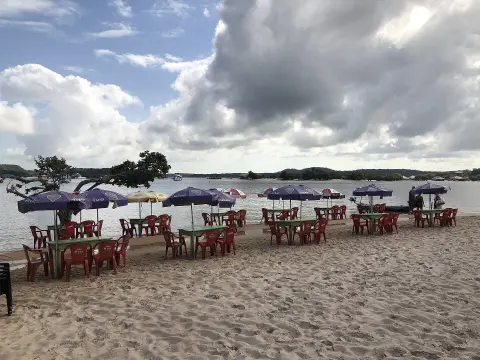
Alter do Chão
Pará (Amazon)
Crystal-clear river beaches and pink dolphins; relaxed Amazon alternative to Manaus crowds.

Chapada dos Veadeiros
Goiás (Central)
Waterfalls, canyons, and quartz crystal landscapes; pristine and quiet compared to Iguaçu.

Ilha do Mel
Paraná (South)
Car-free island with beaches and trails near Curitiba; authentic and low-key beach escape.
Vale do Pati (Chapada Diamantina)
Bahia
Remote hiking paradise with waterfalls and villages; much quieter than Lençóis Maranhenses.
Brazil: quick answers
- How many days do you need in Brazil?
- At least 10 days to see the main highlights; 14 days is ideal. 10 days covers Rio + Iguaçu + one beach or Amazon leg without rushing; 14 allows Northeast or Pantanal addition with buffer for flights and weather.
- Do I need a visa for Brazil?
- United States: e-Visa US$80.90, 90 days (multiple entry up to 5–10 years validity); United Kingdom: Free, 90 days; EU (e.g. Germany): Free, 90 days (any 180-day period); India: Visa required (consular/e-Visa, ~US$80–100, check VFS); Australia: e-Visa US$80.90, 90 days. Passport valid 6+ months beyond stay recommended; onward ticket often checked. No ETIAS/ETA needed for visa-free; e-Visa via brazil.vfsevisa.com only for US/CA/AU. Always confirm on the official government site before booking.
- How much does a trip to Brazil cost per day?
- Roughly US$50 per person per day on a budget, US$100 mid-range and US$200 for luxury, excluding flights.
- What is the best SIM card or eSIM for Brazil?
- Vivo Tourist eSIM: 25 GB + minutes/SMS, 30 days ~USD 10–11 (R$55); buy via operator site or airport with passport
- Is the tap water safe to drink in Brazil?
- Tap water not reliably safe; drink bottled or filtered
- What should I wear in Brazil?
- Casual, light layers; beachwear common in coastal cities, smart-casual evenings in Rio/São Paulo. Cover shoulders/knees at churches (e.g., no shorts/tank tops).
- What is the best way to get around Brazil?
- Limited network; mostly scenic or urban (e.g., Serra do Mar); book via operator sites. Domestic flights essential for long distances; worth it between regions (Rio–Amazon, São Paulo–Northeast).
More country guides
Researched November 2026 from 8 sources including www.travpa.com, www.gov.br, offroutebrazil.com. Prices change; spotted something out of date? Tell us.