Hungary travel guide
 Hungary travel guide

Hungary blends grand Habsburg architecture, thermal baths, ruin bars and hearty paprika-spiced food with the Danube flowing through its vibrant capital. First-timers love Budapest’s thermal-spa culture, Castle Hill views, Jewish Quarter nightlife and easy day trips to wine regions or Lake Balaton. It remains one of Europe’s better-value destinations despite recent forint strength, with excellent public transport, walkable historic centres and a mix of imperial grandeur and laid-back Central European charm.
- Days needed
- 5–7 days
- Daily budget
- $40 – $90
- Currency
- Hungarian Forint (HUF) · 1 USD ≈ 337 HUF
- Language
- Hungarian
- Plugs
- Type C, F · 230V
- Emergency
- 112
When to go to Hungary
Spring (April–June) and autumn (September–October) offer the best balance: mild 15–25°C weather, blooming or colourful landscapes, fewer crowds than July–August and lower hotel prices. Summer peaks with heat (often 28–35°C) and festivals but suits Lake Balaton swimming; winters are cold (near or below freezing, snow possible) yet atmospheric for Christmas markets in December. Avoid peak summer heat waves and January–February for shortest days and closures. Shoulder months minimise both crowds and costs.
Where the weather is best in Hungary, month by month:
Where to go in Hungary
Do I need a visa?
Find your passport in the list. For a tourist trip.
| Your passport | What you need | Cost |
|---|---|---|
| United States | Visa-free · 90 days | Free, 90 days Schengen |
| United Kingdom | Visa-free · 90 days | Free, 90 days Schengen |
| EU (e.g. Germany) | Visa-free | Free movement (ID or passport) |
| India | Visa required | Schengen C visa (~€90 / INR 9,600 + VFS fees) |
| Australia | Visa-free · 90 days | Free, 90 days Schengen |
| Canada | Visa-free · 90 days | Free, 90 days Schengen |
| China | Visa required | Schengen C visa required |
| UAE | Visa-free · 90 days | Free, 90 days Schengen |
Passport must be issued <10 years ago and valid 3+ months beyond planned departure; EES biometric registration applies at first Schengen entry. ETIAS not yet required (expected 2027). Onward ticket and proof of funds may be checked.
Checked 23 Nov 2026. Entry rules and fees change; confirm with the official site or your airline before booking.
Getting there
Budapest Ferenc Liszt International Airport (BUD) is the main gateway, served by Wizz Air, Ryanair, Lufthansa, Turkish Airlines, Emirates and others with extensive European and some long-haul connections.
Getting around Hungary
✈️ Domestic flights
Domestic flights rarely needed; worth it only for quick Budapest–Debrecen hops in peak season.
- Typical cost:
- Typical one-way USD 30–80
- Airlines:
- Wizz Air, Ryanair
🚆 Trains
MÁV network is reliable on main lines; book via mav.hu or app for discounts. IC trains comfortable.
- Typical cost:
- Budapest–Debrecen ~USD 12–18 one-way
- Pass:
- Interrail Hungary One Country Pass: 3 days ~USD 85–110 second class (within 1 month)
🚗 Driving & buses
Right-hand drive; motorways require e-vignette (cameras enforce). Good condition on main routes but rural roads variable.
- Car hire:
- USD 35–60/day economy
- Fuel:
- USD 1.60–2.00/litre (petrol ~1.70, diesel ~1.90)
- Licence:
- International Driving Permit recommended with national licence
⛴️ Ferries & boats
Not a major way to travel
🚇 Local transport
BKK metro, trams, buses in Budapest; buy via BudapestGO app or machines. Validate immediately.
- Typical cost:
- Single ride USD 1.40–1.60 (500 HUF advance); 24h pass ~USD 8 (2,750 HUF)
🚕 Taxis & ride-hailing
Licensed yellow taxis metered; use apps to avoid overcharging. Airport fixed or metered.
- Typical cost:
- Typical 5 km ride USD 9–13 (3,500–4,500 HUF)
- Apps:
- Bolt, Uber (via Főtaxi)
Traffic drives on the right.
Phone, SIM cards and data
- Best-value tourist SIM
- Yettel or Telekom prepaid: 10–20 GB for 7–30 days ~USD 15–30; buy in city stores with passport
- eSIM
- Widely available via Airalo, Nomad or local operators before arrival
- Wi-Fi
- Good free public Wi-Fi in Budapest cafés, stations and many hotels
- Calls & apps
- WhatsApp/ Signal primary; local number rarely needed for visitors
Main networks: Magyar Telekom, Yettel, One (ex-Vodafone).
Money and costs
Per person per day, excluding flights: $40 on a budget, $90 mid-range, $220 luxury.
- Cards
- Widely accepted contactless in cities and tourist areas; decline DCC
- Cash
- Needed for markets, small vendors, some baths and tips
- ATMs
- Bank ATMs (OTP, K&H) best; avoid Euronet high fees
- Tipping
- 10% in restaurants if service good; round up taxis; not expected in bars or for small services
Language
Hungarian. Widely spoken in Budapest tourist areas, hotels and restaurants; limited outside major cities
| English | Local | Say it |
|---|---|---|
| Hello | Szia | See-ah |
| Thank you | Köszönöm | Kuh-suh-nem |
| Please | Kérem | Kay-rem |
| Excuse me / sorry | Elnézést | El-nay-zaysht |
| How much is it? | Mennyibe kerül? | Men-yee-beh ke-rul |
| Where is the toilet? | Hol van a WC? | Hol van ah vay-tsay |
What to wear and local etiquette
Smart-casual in cities; layers for variable weather. Budapest leans fashionable but relaxed.
Religious sites: Modest dress (cover shoulders/knees) at churches and synagogues
Through the seasons: Spring/autumn: light jacket, layers, umbrella. Summer: light clothing, sunscreen, hat. Winter: warm coat, scarf, waterproof boots. Comfortable walking shoes essential year-round.
- Remove shoes when entering homes
- Greet with handshakes or cheek kisses among acquaintances
- Tipping 10% is standard in restaurants
- Avoid discussing politics or WWII history lightly
- Queue orderly; be punctual for appointments
Packing list for Hungary
- ✓Comfortable walking shoes — cobblestones and long days
- ✓Swimsuit and flip-flops — thermal baths
- ✓Reusable water bottle — tap water safe
- ✓Power bank and European plug adapter (Type C/F)
- ✓Light rain jacket or umbrella
- ✓Modest clothing for religious sites
- ✓Portable charger and offline maps app
- ✓Small daypack for day trips
- ✓Plug adapter for type C, F sockets (230V)
Health and safety
- Drinking water
- Tap water safe to drink
- Health
- Routine + Hep A/B, rabies if rural/exposure risk; tick-borne encephalitis in forests
- Common scams
- Overcharging taxis (use apps), fake petitions in tourist spots, pickpockets in crowds
- Emergency numbers
- 112 (general), 104 (medical), 105 (fire), 107 (police)
How many days do you need in Hungary?
Allow at least 5 days to see the highlights; 7 days is ideal. Five days cover Budapest highlights without rushing; seven allows a relaxed pace plus one or two day trips.
7 days: Budapest & Day Trips
- Day 1-3Budapest — Explore Buda Castle, Parliament, thermal baths (Széchenyi/Gellért), ruin bars and Danube cruise.
- Day 4-5Budapest + Eger — Day trip to Eger for castle, thermal baths and wine tasting.
- Day 6-7Budapest + Szentendre or Balaton — Half-day to Szentendre artists’ village or full day to Lake Balaton for relaxation.
14 days: Full Hungary Highlights
- Day 1-5Budapest — Full city immersion: sights, baths, food tours, museums.
- Day 6-8Eger & Tokaj — Wine regions, castles and countryside.
- Day 9-11Lake Balaton — Beach time, sailing or cycling the lakeshore.
- Day 12-14Pécs or Debrecen — Southern baroque city or eastern plains and Hortobágy.
Want a day-by-day plan for your dates? Open any destination above and use “Plan my trip”.
Hidden gems in Hungary
Eger
Northern Hungary
Historic castle town with thermal baths and world-class red wines; far fewer crowds than Budapest.
Tokaj Wine Region
Northeast
UNESCO vineyards and cellars offering sweet aszú wines in a peaceful rural setting.
Szentendre
Danube Bend
Colourful artists’ town with galleries and Serbian heritage, easy half-day escape from the capital.
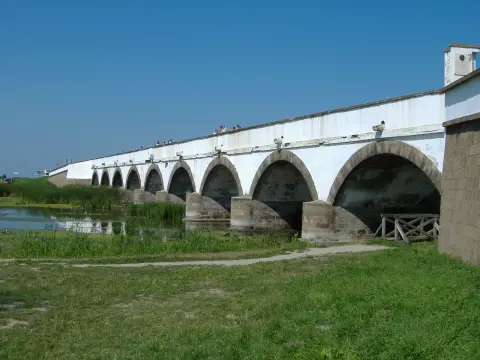
Hortobágy National Park
Great Plain
Traditional puszta horse shows and vast steppe landscapes with minimal tourism.
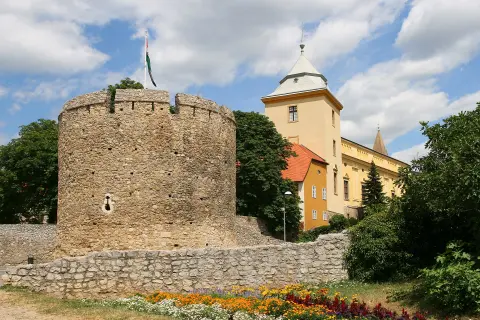
Pécs
Southern Hungary
Baroque architecture, mosques-turned-churches and vibrant café culture in a compact university city.
Aggtelek Caves
Northern border
UNESCO karst caves with stunning stalactites; guided tours in a quiet natural wonder.
Hungary: quick answers
- How many days do you need in Hungary?
- At least 5 days to see the main highlights; 7 days is ideal. Five days cover Budapest highlights without rushing; seven allows a relaxed pace plus one or two day trips.
- Do I need a visa for Hungary?
- United States: Free, 90 days Schengen; United Kingdom: Free, 90 days Schengen; EU (e.g. Germany): Free movement (ID or passport); India: Schengen C visa (~€90 / INR 9,600 + VFS fees); Australia: Free, 90 days Schengen. Passport must be issued <10 years ago and valid 3+ months beyond planned departure; EES biometric registration applies at first Schengen entry. ETIAS not yet required (expected 2027). Onward ticket and proof of funds may be checked. Always confirm on the official government site before booking.
- How much does a trip to Hungary cost per day?
- Roughly US$40 per person per day on a budget, US$90 mid-range and US$220 for luxury, excluding flights.
- What is the best SIM card or eSIM for Hungary?
- Yettel or Telekom prepaid: 10–20 GB for 7–30 days ~USD 15–30; buy in city stores with passport
- Is the tap water safe to drink in Hungary?
- Tap water safe to drink
- What should I wear in Hungary?
- Smart-casual in cities; layers for variable weather. Budapest leans fashionable but relaxed. Modest dress (cover shoulders/knees) at churches and synagogues.
- What is the best way to get around Hungary?
- MÁV network is reliable on main lines; book via mav.hu or app for discounts. IC trains comfortable. Domestic flights rarely needed; worth it only for quick Budapest–Debrecen hops in peak season.
More country guides
Researched November 2026 from 8 sources including www.travpa.com, www.budapesttourism.org, www.nomadstravelguides.com. Prices change; spotted something out of date? Tell us.