💎 Hidden gem · Off Changi, northeast Singapore, 22 km from central Singapore
Pulau Ubin
Bumboats, bicycles and the last of old kampong Singapore
🎧 Listen to this guide · about 6 min
Pop your earphones in and we'll walk you round.
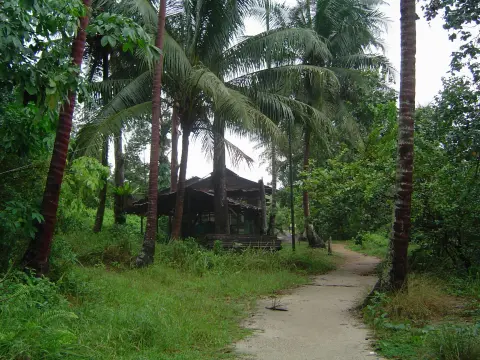
Welcome to Pulau Ubin. Feel that? The air is different here. Just ten minutes ago we were on a ferry pier with the city at our backs. Now we are on an island of dirt roads, zinc-roofed houses, jackfruit trees and the sound of insects. Pulau Ubin is what much of rural Singapore looked like before the high-rise flats. A few dozen people still live here. We will rent bicycles in the village, ride past old granite quarries, and finish on the boardwalks of Chek Jawa, where the sea meets the mangroves. Ride gently, give way to walkers, and keep an eye out. A wild boar may wander across the road, and the island belongs to them as much as to us.
The story of Pulau Ubin
Pulau Ubin means granite island in Malay, and stone is the heart of its story. The island's granite was quarried for well over a century, and much of it went into Singapore's buildings, roads and even the Causeway to Johor. Malay and Chinese villagers lived here too, in kampongs, fishing, farming, rearing prawns and growing rubber and coconuts. At its peak in the 1970s the island had a few thousand residents.
As Singapore modernised, people moved to the mainland for jobs and new flats. The quarries closed one by one, and the population fell sharply. By 2012 only about forty people were thought to live here. Many of the abandoned quarries slowly filled with rainwater and turned into still green lakes.
In 2001, plans to reclaim land at Chek Jawa, on the island's eastern tip, were made public. Volunteers surveyed the shore and found it rich with marine life. Public concern grew, and the government deferred the reclamation. On 7 July 2007 a visitor centre and boardwalk opened, and the area was named Chek Jawa Wetlands. Today the island is managed by the National Parks Board, which aims to keep its rustic character. Bicycles, bumboats and a handful of village shops keep the island's simple rhythm alive.
The setting
Pulau Ubin covers about 10 square kilometres and lies just off Changi in the northeast, facing Johor across the strait. The ferry lands at the village jetty, where you will find bicycle rental stalls, a few drinks shops and old provision stores. From here simple roads lead into a landscape of secondary forest, old plantations and flooded quarries with steep granite walls. The highest point is Bukit Puaka, about 75 metres. In the west is the Ketam Mountain Bike Park, with rougher trails. In the east, Chek Jawa Wetlands has a coastal boardwalk over the shore, a mangrove boardwalk and the Jejawi Tower, about 20 metres high, which climbs into the treetops.
Why it matters
Pulau Ubin matters because it is one of the very last places where Singaporeans can see how their grandparents lived. Its kampong houses, village shrines and dirt tracks are a memory of the country before rapid development. It is also an important refuge for wildlife, from hornbills to wild boar, and the Chek Jawa story remains a landmark moment when public voices helped save a natural area. For locals it is a favourite weekend escape. For visitors it shows a gentle, green side of Singapore that few ever see.
Your walk-through
The stops a guide would take you to, in order.
-
1
Changi Point Ferry Terminal
Our journey starts on the mainland, at Changi Point. Here the bumboats wait at the pier, simple wooden motorboats that leave when about twelve passengers have gathered. Pay the boatman in cash. As you pull away, look back at the Changi coast and ahead at the low green hump of Ubin. The crossing takes about ten minutes. Feel the spray and the smell of the sea.
-
2
Ubin Village and jetty
Step off at the village. These zinc-roofed shops and houses have changed little in decades. Rent a bicycle here, most stalls charge by the day. Take a moment at the small shrines and look at the noticeboards with island news. A few families still run shops and eateries here. If you are hungry, try a plate of noodles or fresh coconut. Then pedal out of the village along the main road.
-
3
Pekan Quarry
Not far from the village, stop at Pekan Quarry. Once workers cut granite here, and the stone went across the water to build the city. Now the quarry is a deep green lake ringed with trees and rock walls. Stand at the viewing area and look at the stillness. Herons fish along the edges. Swimming in the quarries is not allowed, as they are deep and dangerous, but the view alone is worth the stop.
-
4
Kampong houses on the way east
As you ride east, watch for the old kampong houses by the road, wooden or concrete homes with zinc roofs, set among fruit trees. Some are still lived in, so please look from the road and respect people's privacy. You may see durian, rambutan and jackfruit trees, and chickens scratching in the yards. Notice how quiet it is. On the mainland, this kind of scene disappeared long ago.
-
5
Chek Jawa Coastal Boardwalk
At Chek Jawa, leave your bike at the racks and walk. The coastal boardwalk runs out over the shore. At low tide the sea pulls back and reveals sand and seagrass flats, home to sea stars, crabs and sea cucumbers. Look closely into the water. Volunteers once found such rich life here that it helped save this place from reclamation. Parts of the boardwalk may be closed for maintenance, so follow the signs.
-
6
Mangrove Boardwalk and Jejawi Tower
Now loop into the mangroves. Look at the roots of the trees, rising out of the mud like stilts and fingers. They help the trees breathe in waterlogged ground. Listen for the clicking of mudskippers and crabs. Then climb the Jejawi Tower, about twenty metres up, into the canopy. From the top you look over the forest and across the strait to Malaysia. It is a peaceful end to a long day of cycling.
Things you might not know
- Granite from Pulau Ubin was used to build the Johor to Singapore Causeway.
- The island's population fell from a few thousand in the 1970s to around forty by 2012.
- Public concern after volunteer surveys in 2001 led the government to defer reclaiming Chek Jawa.
Researched November 2026 from: en.wikipedia.org, nparks.gov.sg, en.wikipedia.org, nparks.gov.sg. Fees and hours change, so check on the day.