💎 Hidden gem · Constantia, 17 km from central Cape Town
Groot Constantia
By the Tralover editorial team · Fact-checked · How we research
Three centuries of wine beneath the mountain
🎧 Listen to this guide · about 6 min
Pop your earphones in and we'll walk you round.
Welcome to Groot Constantia, where South African wine began. Drive in under the oaks, and the city seems far away. Vineyards roll up towards the mountains, white gabled buildings glow in the sun and the air smells of earth and grapes. This is the oldest wine estate in the country, founded more than three hundred years ago. Its sweet wines were once poured at the tables of European kings and emperors, and written about by great novelists. Today you can walk through the old manor house, peek into the historic cellar and taste wine made from these same slopes. Raise a glass to the past, and enjoy the view.
The story of Groot Constantia
In 1685 Simon van der Stel, the Dutch governor of the Cape, was granted this land below the Constantiaberg. He planted vineyards, fruit trees and oaks, and he retired here, living on the estate until his death in 1712. The name Constantia may honour his wife, his daughter, or the virtue of constancy. Nobody knows for sure.
After his death the estate was split. In the late 1770s, Hendrik Cloete bought the main farm. Under the Cloete family, Constantia's sweet dessert wine became famous across Europe. Jane Austen mentions Constantia wine in her novel Sense and Sensibility. So the story goes, Napoleon asked for it in his exile on St Helena. The family also built the handsome cellar, with a gable sculpted by Anton Anreith.
Then disease, falling sales and a plague of vine pests in the late 1800s hit the estate hard. In 1885 the Cape government bought it as an experimental farm. In 1925 a fire destroyed the manor house, but it was restored to its old Cape Dutch form. Since 1993 the estate has been run by the Groot Constantia Trust. It makes wine again, including a sweet dessert wine first released in 2003, called Grand Constance. Visitors can now walk through the restored buildings and taste wines grown on the same slopes van der Stel first planted.
The setting
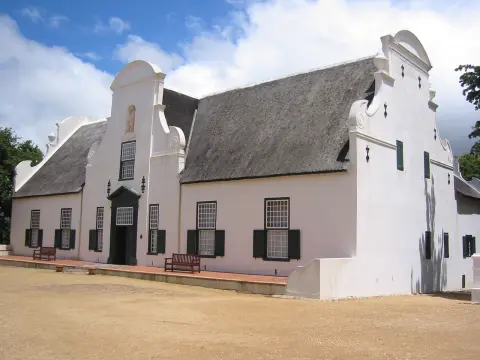
Groot Constantia lies in the Constantia valley, south of the city, on the slopes of the Constantiaberg. The estate is cooled by breezes from False Bay, which suits the vines. Its heart is the white Cape Dutch manor house, with thatched roofs and curving gables, set among oaks. Nearby stand the Cloete Cellar, with its carved pediment, and the Jonkershuis, an old homestead that is now a restaurant. The modern cellar and tasting rooms sit a little further on. Behind everything are the vineyards and the green mountain slopes of Table Mountain National Park. From the estate you can see across the valley to False Bay.
Why it matters
Groot Constantia is where the wine culture of South Africa began, and it still shapes the country's image today. The estate's buildings are some of the finest Cape Dutch architecture anywhere. They also tell a fuller story. Like every big Cape farm of its time, Groot Constantia relied on the labour of enslaved people, and the museum now speaks about them too. For visitors, it is a gentle way to learn about Cape history while tasting the wines that made the valley famous. It also makes a lovely stop on the way to the southern peninsula.
Your walk-through
The stops a guide would take you to, in order.
-
1
The oak avenue and entrance
As you drive in, look up at the great oak trees. Van der Stel planted oaks all over the Cape, and their shade gives this estate its peaceful feel. Park and walk towards the white gables. Notice how the buildings sit low and wide, built to stay cool in summer. Behind them, the vineyards climb towards the mountain.
-
2
The manor house museum
Step into the manor house. Inside, rooms are furnished as they might have been in the days of the Cloete family, with dark wood furniture, porcelain from Asia and paintings. Look at the thick walls and high ceilings. The house burned in 1925, but it was carefully rebuilt. The museum also tells the stories of the enslaved people who worked these lands. Take time to read their names and histories.
-
3
The Cloete Cellar
Now walk to the Cloete Cellar. Look up at the pediment above the door. It was sculpted by Anton Anreith, one of the finest artists in the early Cape, and shows figures linked to wine and plenty. Inside is a small wine museum, with old bottles, drinking vessels and tools. This is where the famous sweet Constantia wine was once made and stored before it sailed to Europe.
-
4
The vineyards and the view
Wander a little way along the edge of the vineyards. Turn around and look back at the estate, the valley and the mountains. On a clear day you can see all the way to False Bay. The slopes here catch the cool sea breezes, which help the grapes ripen slowly. That is part of the reason this valley has made fine wine for more than three hundred years.
-
5
The tasting room
End your visit in the tasting room. Try a few of the estate's wines, including the sweet Grand Constance, made in the old Constantia style. Hold it up to the light. It glows like honey or amber. As you taste, think of the long journey such wine made by ship, centuries ago, to the tables of Europe. If you are driving, ask for small pours, or try the grape juice.
Things you might not know
- The estate was granted to Governor Simon van der Stel in 1685, and he lived here until his death in 1712.
- Jane Austen mentions Constantia wine in Sense and Sensibility.
- The manor house burned in 1925 and was restored in its original Cape Dutch style.
Researched November 2026 from: grootconstantia.co.za, en.wikipedia.org, d7.westerncape.gov.za. Fees and hours change, so check on the day.