⭐ Must-see · Eminönü, 1 km from central Istanbul
Spice Bazaar
By the Tralover editorial team · Fact-checked · How we research
Saffron, sumac and Turkish delight by the Golden Horn
🎧 Listen to this guide · about 6 min
Pop your earphones in and we'll walk you round.
Follow your nose. You are at the Mısır Çarşısı, the Egyptian Bazaar, which visitors call the Spice Bazaar. Long before you see the gate, you smell it: cumin, cinnamon, dried mint, roasting coffee. Inside, a vaulted hall is lined with stalls heaped with red pepper flakes, golden saffron, sumac, pistachios, dried apricots and pyramids of Turkish delight dusted with sugar. Shopkeepers call out in half a dozen languages and offer you a taste. Just outside, ferries come and go across the Golden Horn, gulls wheel over the water, and the great New Mosque watches over it all. Come hungry and curious. This is a place for your senses as much as your eyes.
The story of Spice Bazaar
In 1660 a great fire swept through this waterfront district. Soon after, Turhan Hatice Sultan, the powerful mother of Sultan Mehmed IV, took over an unfinished mosque project on the shore and completed it as the New Mosque. The bazaar was built as part of the same complex, and the rents from its shops paid for the mosque's upkeep. Court architects, including Koca Kasım Ağa, are linked with the work, which was under way from the 1660s.
The name Egyptian Bazaar comes from the money that funded it, which came from the Ottoman province of Egypt. Ships from Egypt and the East unloaded spices, coffee and other goods at this harbour. In Turkish, mısır also means maize, so the name is sometimes mistranslated as the Corn Bazaar.
For centuries this was where the city bought its medicines as well as its food. Herbalists and spice merchants mixed remedies here. Over the years it has been damaged by fire and repaired, and in recent decades it has been restored, but the stalls still trade much as they always have. Today the shops sell as much to visitors as to locals, but walk a street or two away and you will still find the old wholesale trade going strong.
The setting
The bazaar sits at Eminönü, on the southern shore of the Golden Horn, right where the Galata Bridge lands. It is a long, L-shaped covered hall of brick and stone with high vaults, and gates on each side. Around eighty-five shops line the main arms. The New Mosque stands at the corner of the L, with its cascade of domes and a wide forecourt full of pigeons and people. Outside, narrow streets run uphill into the Tahtakale market quarter, where wholesalers sell everything from kitchenware to coffee. In front lies the busy ferry square and the water.
Why it matters
The Spice Bazaar is still how many Istanbul families shop for spices, nuts and coffee, especially in the streets just outside. It keeps alive a trading tradition that linked this city with Egypt, India and beyond. Together with the New Mosque, it shows the Ottoman idea of a complex where faith, charity and commerce supported each other. For visitors, it is a sweet, noisy, delicious introduction to Turkish food culture. Taste before you buy, and take home a small bag of something you have never cooked with before.
Your walk-through
The stops a guide would take you to, in order.
-
1
Eminönü square and the New Mosque
Start in the square by the water. Behind you, ferries leave for Asia and up the Bosphorus. In front, the New Mosque rises in steps of domes. It took decades to finish and was completed in the 1660s under Turhan Hatice Sultan. If you have time, step into its courtyard. Then turn toward the long brick building beside it. That is the bazaar, built to support this mosque.
-
2
The main gate
Enter by the main gate facing the square. Look up at the arched entrance. Inside, the hall stretches ahead under tall vaults. Above the gate there is a historic restaurant that has been part of this corner for generations. Take a breath. This first moment, when all the smells meet you at once, is one of the joys of Istanbul.
-
3
The spice stalls
Walk slowly along the main arm. Look for pul biber, the red pepper flakes on every Turkish table, and sumac, deep red and lemony, used on salads and kebabs. There is saffron in many grades, so ask questions and buy from a vendor who explains clearly. You will see herbal teas, often sold with big promises about health. Enjoy them as tea, and take the promises lightly.
-
4
Turkish delight and dried fruit
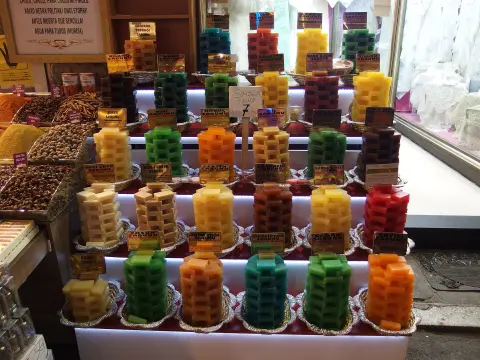
Now the sweets. Lokum, Turkish delight, comes in rose, pomegranate, pistachio and many more flavours. Ask to taste; most stalls are happy to offer. You will also see dried figs and apricots, many from the regions of Aydın and Malatya, and strings of dried peppers and aubergines used for stuffing in winter. Buy small amounts from two or three places and compare.
-
5
The Tahtakale streets
Leave through the side gate toward the west, into the streets where locals do their shopping. Here are cheese and olive shops, sausage makers and coffee roasters. Follow your nose to the queue at Kurukahveci Mehmet Efendi, the coffee roaster that has been selling ground Turkish coffee in this area since the nineteenth century. This is the real market, a little rougher and much less polished.
Things you might not know
- It is called the Egyptian Bazaar because it was built with revenue from Ottoman Egypt.
- Shop rents were meant to pay for the upkeep of the New Mosque beside it.
- The Turkish word mısır also means maize, which is why the name is sometimes wrongly translated as the Corn Bazaar.
Researched November 2026 from: en.wikipedia.org, timeout.com, istanbul.com. Fees and hours change, so check on the day.