💎 Hidden gem · East Las Vegas Valley, along the Las Vegas Wash, 20 km from central Las Vegas
Clark County Wetlands Park
Birds, reeds and quiet water at the edge of the city
🎧 Listen to this guide · about 5 min
Pop your earphones in and we'll walk you round.
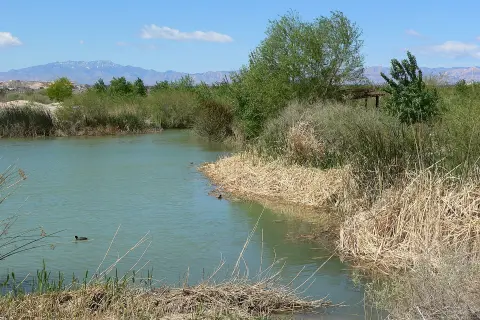
Welcome to a side of Las Vegas few visitors ever see. Here, on the eastern edge of the valley, the desert gives way to ponds, cattails and cottonwood trees. Ducks paddle in the shallows, herons stand perfectly still, and the air is full of birdsong. This is Clark County Wetlands Park, the largest park in the county. It is calm, green and completely free. Paved paths lead you over bridges and along the water, and the distant Strip towers look like a mirage on the horizon. Bring binoculars if you have them, walk softly, and let us see who is at home today.
The story of Clark County Wetlands Park
The park grew around the Las Vegas Wash, the natural channel that drains the whole valley into Lake Mead. As the city grew, more water flowed down the wash: storm water, urban runoff, shallow groundwater and treated water from the city's treatment plants. The faster flow began cutting deep into the wash, washing away wetlands and carrying sediment toward the lake.
In 1991 local voters approved a bond to help pay for a park here, and a master plan was finished in 1995. In 1998 a group of agencies and local partners formed the Las Vegas Wash Coordination Committee to restore the wash. The first erosion control weir, a low structure that slows the water and lets wetlands grow, was completed in 1999.
The Nature Preserve trails opened in 2001, and more trailheads followed. The Nature Center opened in 2013, and paved loop trails were finished in 2013 and 2015. Today the restored wetlands clean the water on its way to Lake Mead and give wildlife a home.
The setting
The park covers about 2,900 acres along the Las Vegas Wash, at the eastern edge of the valley. At its heart is a 210-acre Nature Preserve with ponds, marshes and paved and dirt trails, where dogs are not allowed so wildlife can rest. The Nature Center, a modern building with exhibits about the park's plants and animals, overlooks the ponds. A series of weirs step the water down the wash. Beyond the green lies open desert, with the Frenchman and Sunrise mountains rising close by.
Why it matters
Wetlands Park shows that the city's water story does not end in the casinos. The restored wetlands filter water before it reaches Lake Mead, the reservoir that supplies most of the valley. More than 300 bird species and some 70 species of mammals and reptiles have been recorded here, including beavers, coyotes and bobcats. For local families and school groups, it is a living classroom. For visitors, it is proof that the desert can surprise you.
Your walk-through
The stops a guide would take you to, in order.
-
1
The Nature Center
Start at the Nature Center. Inside, free exhibits explain how the wetlands work and which animals live here. Look for the large windows that frame the ponds. Rangers and volunteers can tell you which birds have been spotted recently. Pick up a trail map, and use the restrooms before heading out, because facilities are limited on the trails.
-
2
Overlook above the ponds
Step outside to the overlook. Below you, the ponds shine among reeds and cattails. In the cooler months, ducks and other water birds arrive from the north to spend the winter, so November is a fine time to visit. Look for great egrets, white and tall, and the quick flash of a kingfisher. Take a few minutes just to listen.
-
3
The Nature Preserve trail loop
Now follow the paved trail into the Nature Preserve. It winds along the water and over small bridges. Cottonwoods and willows give a little shade. Watch the mud at the edges for tracks of coyotes or raccoons. Stay on the path; this preserve is set aside for wildlife, and that is why it is so peaceful.
-
4
A weir on the Las Vegas Wash
Continue to the wash itself, where you can see one of the weirs. These low walls slow the water so it stops tearing at the banks. The calm water behind each weir lets plants take root and wetlands grow. The first one was built in 1999. It is a simple idea, but it changed the whole landscape here.
-
5
View back to the Strip
Before you leave, find an open spot and look west. Far away across the valley, the towers of the Strip rise out of the haze. It is an amazing contrast: herons and reeds here, and the busiest street in Nevada on the skyline. The water flowing past your feet came from that city, and it is on its way to Lake Mead.
Things you might not know
- More than 300 bird species have been recorded in the park.
- At about 2,900 acres, it is the largest park in the Clark County park system.
- Water in the Las Vegas Wash flows on into Lake Mead, the valley's main water source.
Researched November 2026 from: en.wikipedia.org, clarkcountynv.gov, travelnevada.com. Fees and hours change, so check on the day.