⭐ Must-see · Downtown Cabo San Lucas, 1 km from central Los Cabos
Cabo San Lucas Marina
Where the boats come home and the whales begin
🎧 Listen to this guide · about 6 min
Pop your earphones in and we'll walk you round.
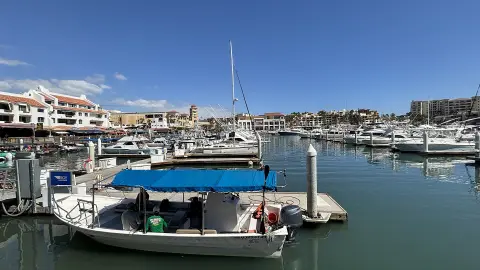
Welcome to the marina, the beating heart of Cabo San Lucas. Walk along the malecón, the waterside promenade, and you will see the whole life of this town. Fishing boats returning with marlin flags flying. Glass-bottom boats loading for the arch. Sleek yachts, little pangas, and sailboats getting ready for sunset. Pelicans perch on the pilings and wait for scraps. In winter, this is where your whale-watching adventure begins, with humpbacks out in the bay. Take your time here. Grab a coffee, wander the docks, and watch the boats come and go against the hills of the cape.
The story of Cabo San Lucas Marina
For centuries, the bay of San Lucas was a natural anchorage at the tip of the peninsula. In the twentieth century a small town grew around a fish cannery near the waterfront, which operated for decades and shaped the life of the village.
The big change came in the 1970s. The Transpeninsular Highway linked the cape to the north in the early 1970s, and around the same time a mudflat and low ground behind the beach was dredged out to create the harbour you see today. Sources give slightly different years for the dredging, from 1973 to 1975. Sport-fishing had already drawn anglers and celebrities to the cape by plane and yacht, and the new marina gave them a safe home port.
The town grew fast around it. Today Cabo San Lucas is famous as a sport-fishing capital, especially for marlin, and the marina is the base for most boat tours in the bay. Each winter, from mid-December to mid-April, licensed boats leave from here to watch humpback whales, under federal rules that set how close boats may approach and how long they may stay.
The marina also changed the town's skyline and its economy. Restaurants, shops and hotels grew along the water, and the old cannery workers' houses disappeared. Many local families who once worked in fishing found new jobs as captains, deckhands and guides. Today the harbour shelters hundreds of boats, from small pangas to large private yachts.
The setting
The marina is an enclosed harbour shaped like a long basin, with a narrow channel opening to the bay near Médano Beach. A promenade runs around much of the water's edge, lined with restaurants, shops and tour kiosks. Docks reach out into the basin, packed with fishing boats, yachts and tour vessels. At the channel end you get your first view toward Land's End. The weigh station area is where fishing boats bring in their catch, and pelicans and sea lions often wait nearby. At night the waterfront fills with lights and music, and the reflections of the boats shimmer on the calm water of the basin.
Why it matters
The marina turned a remote fishing village into a world sport-fishing and whale-watching centre. Most of the boat experiences in Los Cabos start here, from trips to the arch to winter whale tours. It is also a working harbour, where captains, deckhands and fish cleaners earn a living. Choosing licensed operators who follow the whale-watching rules helps protect the animals that make this bay so special. It is a place where you can talk directly to the captains, learn about the fish they chase, and understand how much the town still depends on the sea. Ask questions. Most crews love to share their stories.
Your walk-through
The stops a guide would take you to, in order.
-
1
The malecón promenade
Start on the promenade near the main plaza area. Look out across the basin. Count the fishing boats with tall outriggers, those long poles sticking out from the sides. They spread the lines when trolling for marlin and dorado. Many boats leave before sunrise and come back in the early afternoon. Early risers can watch the fleet leave in the half-light of dawn.
-
2
The fishing docks and weigh station
Walk toward the docks where the sport-fishing boats tie up. When a boat flies a small flag from its rigging, it is often signalling a catch. Many captains now encourage catch and release for billfish, so you may see flags for fish that were let go. Watch the pelicans nearby. They know exactly when the fish cleaning begins. Ask a captain about the day's catch, and you will often get a long story.
-
3
Sea lions at the docks
Look down near the docks and you may spot a sea lion lounging on a float or swimming between boats, hoping for a free meal. They are wild animals, so keep your distance and do not feed them. Their bark carries right across the harbour. Sea lions can bite, so watch your fingers near the edge of the dock.
-
4
Tour kiosks and the whale season
Here are the tour kiosks. Between December 15 and mid-April, this is where whale-watching trips depart. Humpbacks come to these warm waters to mate and give birth, and the peak is usually mid-January to mid-March. Ask whether the operator is licensed and follows the federal rules, and whether the conservation wristband is included. Ask too about the size of the group, because smaller boats often feel more personal.
-
5
The channel mouth
End your walk near the channel, where the marina opens to the bay. Watch the boats file out toward Land's End. From here you see the granite headland rising ahead. At sunset, the sailboats glide past one by one, and the whole harbour turns pink and gold. This is also a good place to watch pelicans dive for fish.
Things you might not know
- The marina basin was dredged in the 1970s from low ground behind the beach, where the cannery-era village once stood.
- Licensed whale watching in Los Cabos is allowed from December 15 into April, under the federal standard NOM-131-SEMARNAT-2010.
- Cabo San Lucas is known as one of the world's top marlin fishing grounds, and many boats now practise catch and release.
Researched November 2026 from: sandiegored.com, mexiconewsdaily.com, thecabosun.com, visitloscabos.travel. Fees and hours change, so check on the day.