⭐ Must-see · Downtown San José del Cabo, 33 km from central Los Cabos
San José del Cabo Historic Art District
Mission bells, cobbled lanes and Thursday night galleries
🎧 Listen to this guide · about 6 min
Pop your earphones in and we'll walk you round.
Welcome to San José del Cabo, the older sister of Cabo San Lucas. Here the pace slows down. The streets are narrower, the buildings are low and painted in warm colours, and the main square is shaded by trees. At one end of the plaza stands the mission church, its twin towers bright against the sky. Around you, in the lanes just north of the square, are dozens of art galleries, selling paintings, sculpture, ceramics and silver. If you come on a Thursday evening between November and June, you have chosen well. That is when the Art Walk fills these streets with music, wine and conversation. Let us take a stroll.
The story of San José del Cabo Historic Art District
San José del Cabo began as a Jesuit mission. In 1730, Father Nicolás Tamaral founded the Misión Estero de las Palmas de San José del Cabo Añuití near the river and its freshwater estuary, among the Pericú people. Freshwater was rare in this desert, which is why ships also stopped here for water.
The mission's early years were violent. In 1734 the Pericú rose up against the missions in the south of the peninsula, and Father Tamaral was killed. The mission was later restored, moved and rebuilt more than once, and it was eventually closed in the nineteenth century. The church you see today on the plaza was completed in 1940, after earlier buildings were damaged by storms.
The town's main square is Plaza Mijares, named for José Antonio Mijares, a Mexican naval officer who died defending San José during the war between Mexico and the United States in 1847. In recent decades the old houses around the plaza have become galleries, studios and restaurants, and the Art Walk, held on Thursday evenings in the high season, has turned the district into a gathering place for artists and visitors alike. Each March, the town also celebrates its patron saint, Saint Joseph, with fairs, music and processions.
The setting
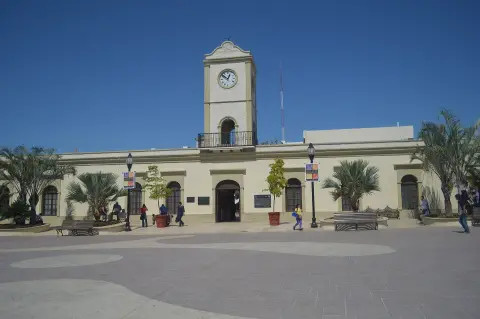
The historic centre sits slightly inland, a short drive up from the hotel beaches. Plaza Mijares is its heart, a paved square with a kiosk and trees, faced on one side by the mission church of San José. North of the plaza, the art district fills a few blocks around Calle Obregón, Morelos and Comonfort, with low adobe and stucco buildings, wrought-iron windows and courtyards. To the east, the river runs underground before reaching the estuary near the sea. The streets are mostly flat and easy to walk, and many buildings have been restored with care, keeping their old façades while opening their interiors to art.
Why it matters
This is where modern Los Cabos began, with the first mission at the cape and the town that grew around it. Today the district keeps that history alive while giving local and visiting artists a stage. The Thursday Art Walk is free, open to everyone, and one of the best ways to meet the people who live here and to take home something made in Baja. It also shows how history and creativity can live side by side. The same streets that grew around a mission now hold some of the finest contemporary art in Baja California Sur.
Your walk-through
The stops a guide would take you to, in order.
-
1
Plaza Mijares
Start in the square. Look around at the trees, the bandstand and the families sitting on the benches. On weekends and festival days, this is where the town gathers. The plaza is named for José Antonio Mijares, a naval officer who died defending San José in 1847, during the war with the United States. On festival days, the square fills with music, food stalls and dancing.
-
2
Mission church of San José
Now face the church with its two towers. The present building dates from 1940, but the mission here was founded in 1730 by Father Nicolás Tamaral. Look above the main door for the tile mosaic. It shows Tamaral's death in the Pericú uprising of 1734. Please be quiet and respectful if a service is underway. Inside, the church is simple and calm, a cool refuge from the sun.
-
3
Town hall and the old streets
Walk along the side of the plaza and look at the low colonial-style buildings, including the town hall. Notice the thick walls and shuttered windows, built to keep out the heat. Many of these houses belonged to old local families, and some still do. If it is open, peek into the courtyard of the town hall.
-
4
Calle Obregón galleries
Head north into Calle Obregón, the heart of the art district. Galleries line both sides. You will find bold paintings, Huichol beadwork, sculpture and fine jewellery. On Art Walk evenings, many galleries offer a glass of wine and the artists are often there to chat. Browsing is free, and nobody minds if you just look. Ask about the artists, many of whom live and work in Baja California Sur.
-
5
Side lanes and courtyards
Wander into the side streets, Morelos and Comonfort. Peek into the courtyards. Some hide tiny cafés, others open studios where you can see work in progress. As the evening goes on, you may hear live music drifting from a doorway. This is a neighbourhood made for slow walking. These quiet streets are a good place to slow down and listen.
-
6
Back to the plaza at dusk
End where you began, in the plaza, as the lights come on. Buy a churro or a paleta, an ice pop, from a stall, and watch the town at its most relaxed. The church glows in the evening light. It is a lovely way to see a quieter side of Los Cabos. Families stroll here until late, and children chase each other around the bandstand.
Things you might not know
- The mission of San José del Cabo was founded in 1730 by the Jesuit Nicolás Tamaral, who was killed in the Pericú uprising of 1734.
- The present mission church on Plaza Mijares was completed in 1940.
- The Art Walk runs on Thursday evenings, usually from about 5 to 9 pm, from November to June.
Researched November 2026 from: en.wikipedia.org, en.wikipedia.org, mexiconewsdaily.com, zonaturistica.com. Fees and hours change, so check on the day.