⭐ Must-see · Gros Islet, 2 km from central St Lucia
Gros Islet Village and Friday Street Party
Grilled fish, loud music and Friday nights in the street
🎧 Listen to this guide · about 6 min
Pop your earphones in and we'll walk you round.
Welcome to Gros Islet. By day it is a quiet fishing village of narrow streets, small wooden houses and a church by the sea. Boats rest on the sand and fishermen mend nets. But on Friday nights, as the sun goes down, something changes. Smoke rises from dozens of grills. Speakers the size of wardrobes are wheeled out. The smell of fish, chicken and corn fills the air, and the music starts. Locals and visitors crowd into the streets to eat, drink and dance until late. This is the Jump-Up, and it has been part of Friday life here for decades. Come hungry, bring small notes, and be ready to move.
The story of Gros Islet Village and Friday Street Party
Gros Islet means large island in French, a name that appears on a French map as early as 1717. The area was home to Amerindian peoples long before Europeans arrived. In 1749 the first Catholic priests on the island settled here, and Gros Islet became one of the oldest parishes in Saint Lucia.
The village sits beside Rodney Bay, a fine natural anchorage. During the wars of the 18th century the British built a naval base on Gros Islet Bay in 1782, and for a short time the settlement itself was renamed Fort Rodney, after the admiral. For most of its life, though, Gros Islet was simply a fishing community, poor, close-knit and tied to the sea.
The late 20th century changed the area around it. A mangrove swamp next to the village was dredged to create Rodney Bay Marina, and hotels, restaurants and villas spread along the bay. Gros Islet grew quickly and is now one of the most populated communities in Saint Lucia. Through all of it, the old village kept its character. Its Friday street party, which the Saint Lucia Tourism Authority says has run weekly for more than 50 years, began as a local gathering and grew into the island's most famous night out.
The setting
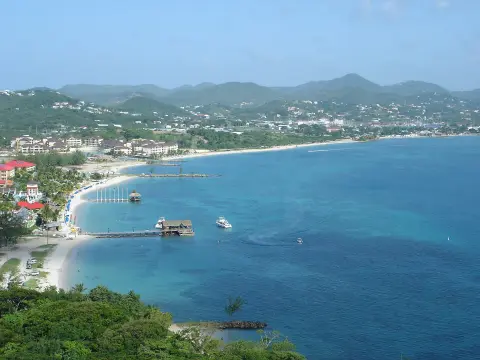
Gros Islet village is a grid of narrow streets just north of Rodney Bay, sloping gently down to a small beach where fishing boats are pulled up on the sand. Houses are small and close together, many of them wooden, painted in bright colours, with porches facing the street. The Catholic church stands near the waterfront. On Friday nights the centre of the action is Dauphin Street and the streets around it, which are closed to traffic. Grills and stalls line the pavements, bars open their doors wide, and sound systems are set up at the corners. The crowd is thickest late in the evening. Pigeon Island rises just to the north, a dark shape against the night sky.
Why it matters
The Friday street party is one of the few big tourist experiences in Saint Lucia that still belongs to local people first. The cooks, bar owners, DJs and dancers are mostly from Gros Islet and nearby communities, and the money spent here goes straight to them. It is also a living showcase of island culture: soca, dancehall, zouk and local Kwéyòl music, Creole food and the easy friendliness of a village night out. For the village, it is a weekly source of income and pride. For visitors, it is a chance to step outside the resort and share a real evening with Saint Lucians.
Your walk-through
The stops a guide would take you to, in order.
-
1
Waterfront and fishing beach
Arrive before dark and start at the small beach where the fishing boats rest. Watch the light fade over Rodney Bay and Pigeon Island. Fishermen often land their catch here, and some of tonight's fish may have come out of these very boats. This is the quiet Gros Islet, the village as it has been for generations, before the music starts.
-
2
Parish church
Walk past the Catholic church near the sea. Gros Islet is one of the oldest parishes on the island; the first priests settled here in 1749. The church is still the centre of village life for weddings, funerals and Sunday Mass. Pause outside and notice the contrast: in an hour, the streets around it will be packed with dancers.
-
3
Fish grills
As the evening starts, follow the smoke to the grills. Vendors cook fish, chicken, pork ribs and, in season, lobster over open flames. Look for corn on the cob and local sides like bakes and macaroni pie. Choose your plate, pay in EC dollars, and find a spot to stand and eat. Ask the cook what came in fresh today.
-
4
Dauphin Street
This is the heart of the party. Dauphin Street fills with people, bars spill onto the pavement and sound systems face each other across the road. You will hear soca, dancehall, reggae and zouk. Try a cold Piton, the local beer named after the mountains in the south, or a rum punch. Watch the locals dance first, then join in.
-
5
Late night
After ten, the crowd grows and the music gets louder. The party often runs well past midnight. Keep your valuables secure, carry only what you need and stick with your group. When you are ready to leave, use a licensed taxi with an H on the number plate, and agree the fare before you get in.
Things you might not know
- Gros Islet means large island in French, and the name appears on a French map from 1717.
- Rodney Bay Marina, next to the village, was created by dredging a mangrove swamp.
- The Friday street party is usually skipped on Good Friday.
Researched November 2026 from: en.wikipedia.org, stlucia.org, frommers.com. Fees and hours change, so check on the day.