🚗 Day trip · Merbok, Kedah, 65 km from central Penang
Bujang Valley Archaeological Museum
Ancient temples at the foot of a sailors' mountain
🎧 Listen to this guide · about 5 min
Pop your earphones in and we'll walk you round.
Look north from the museum gardens, and you will see a great mountain rising above the plain. That is Gunung Jerai, and for centuries it was a landmark for sailors crossing the Bay of Bengal. At its feet, long before George Town or Melaka existed, a trading kingdom flourished. Its people built temples of brick and stone, smelted iron and traded with India, China and the Middle East. Welcome to the Bujang Valley Archaeological Museum, in Merbok, Kedah. Here, among frangipani trees, you will walk around temple foundations more than a thousand years old. It is quiet, often almost empty, and full of stories.
The story of Bujang Valley Archaeological Museum
Between about the fifth and fourteenth centuries, the area around the Bujang Valley was home to a kingdom historians call Kedah Tua, or Old Kedah. It sat on the sea route between India and China, and ships came here to trade and wait for the monsoon winds. Indian religious ideas arrived with the traders, and the people built Hindu and Buddhist temples, known locally as candi.
More than fifty candi have been found across the valley. Archaeologists, including H. G. Quaritch Wales in the 1930s, studied and excavated many of them. One of the best known is Candi Bukit Batu Pahat, a Hindu temple on the museum grounds, believed to have had a granite and wood superstructure resting on stone pillar bases. Other temples from around the valley were later moved here, each stone marked and rebuilt to its original plan.
Recent digs at Sungai Batu, nearby, uncovered jetties, iron-smelting sites and a brick monument dated to about 110 AD. In 2013 a developer demolished one ancient candi, known as Candi 11, on private land. The loss sparked national anger and new calls to protect the valley.
The setting
The museum sits at the foot of Gunung Jerai, the 1,217-metre mountain that dominates the Kedah coast. The grounds are laid out on a gentle hillside, with lawns, trees and paths that lead to the reconstructed temples. Most are square platforms of laterite, granite or brick, with steps and the bases of columns that once held wooden roofs. Candi Bukit Batu Pahat stands up a short path, with its sanctum and pillared hall. Inside the museum building are cases of beads, pottery, ceramics from China and West Asia, statues, inscriptions and iron tools, all found in the valley.
Why it matters
The Bujang Valley is one of the most important archaeological sites in Southeast Asia. It shows that this coast was part of a sea-trading world over a thousand years ago, long before European ships arrived. It also reminds Malaysians of the deep Hindu and Buddhist roots in their history. The 2013 destruction of Candi 11 showed how fragile this heritage still is, which makes a visit here all the more worthwhile.
Your walk-through
The stops a guide would take you to, in order.
-
1
The museum gallery
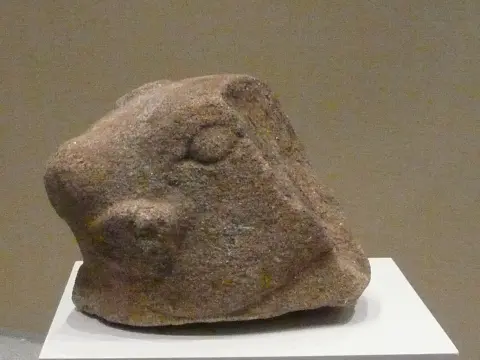
Start inside the museum. Look at the beads, broken ceramics and pieces of glass. They came from India, China and the Middle East, and they tell you how far traders came to reach this valley. Find the stone statues and inscriptions. Some carry words in old Indian scripts. These small objects are the voice of a kingdom that left no written history of its own.
-
2
Iron and trade display
Look for the displays on iron. Old Kedah was a major producer of iron, and its products have been traced to India and China. Imagine furnaces glowing by the river, and ships loading iron and forest goods. This trade, more than anything, made the valley rich.
-
3
Relocated candi in the gardens
Now step outside into the gardens. Here are temples brought from sites around the valley, rebuilt stone by stone. Look at the square bases and the steps leading up. Most had wooden walls and roofs, long since rotted away. What survives is the foundation, the solid heart of each temple.
-
4
Path to Bukit Batu Pahat
Follow the path up the slope through the trees. You are walking where pilgrims once walked, toward a sacred hill. Listen to the birds and the stream. In the morning it is cool here, and the shadows of the trees fall across the old stones.
-
5
Candi Bukit Batu Pahat
Here is Candi Bukit Batu Pahat, the best-known temple of the valley. Look for the inner sanctum, called the vimana, where the image of the god stood, and the pillared hall, or mandapa, in front of it. Count the stone bases where pillars once rose. Stand quietly. People came here to pray more than a thousand years ago.
-
6
View of Gunung Jerai
On your way back, find a clear view of Gunung Jerai. For sailors coming from the Bay of Bengal, this mountain was the sign that they had reached the Malay Peninsula. It is why a kingdom grew here at all. Take a last look, and imagine the ships arriving with the monsoon.
Things you might not know
- More than fifty ancient candi have been found in the Bujang Valley.
- Excavations at nearby Sungai Batu found a brick monument dated to about 110 AD.
- Gunung Jerai, which rises behind the museum, is 1,217 metres high.
Researched November 2026 from: en.wikipedia.org, jmm.gov.my, thestar.com.my. Fees and hours change, so check on the day.